
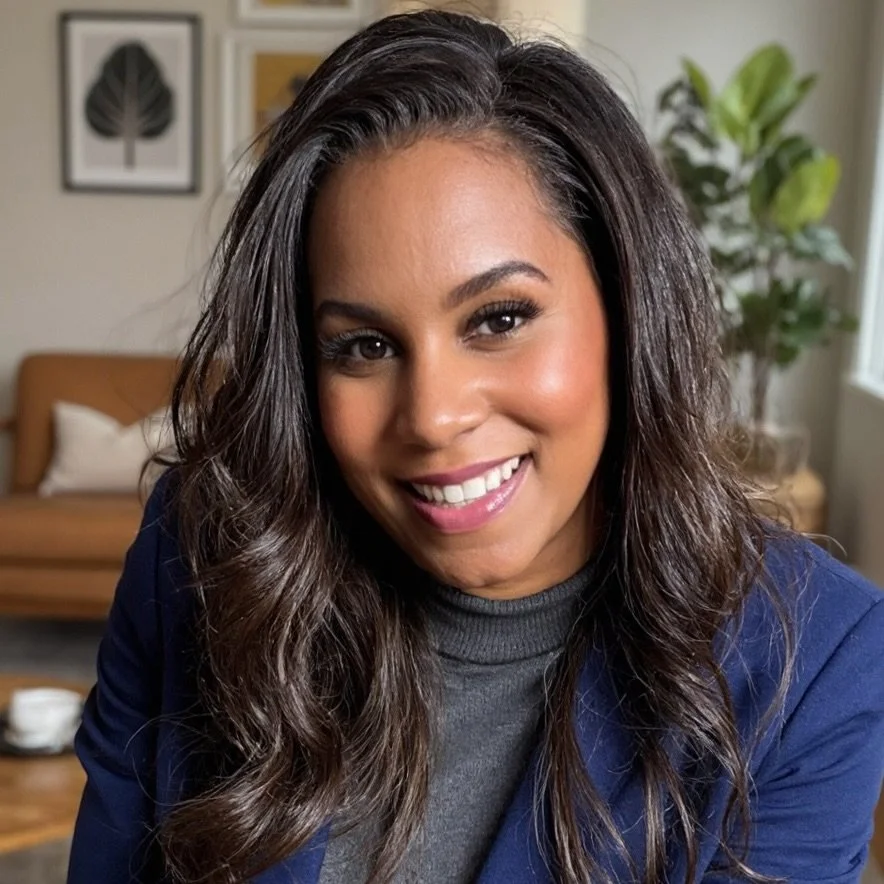
Chenae Goodson, NCPT Lead Specialist
Chenae Goodson serves as Lead Specialist at GoodSense Institute for Neurodevelopment.
Chenae’s professional background includes more than a decade working as a Behavioral Health Case Manager, disability law paralegal, and special education advocate, supporting families as they navigate complex medical-legal and educational systems designed to protect the rights of children with disabilities. In her earliest career, she operated a highly sought-after nursery program, an experience that deepened both her understanding of, and passion for, early childhood development.
Lifelong learning is a guiding principle for Chenae. In addition to her academic background in Medical-Legal Studies and Psychology, she has maintained her professional development in Child Development through certificates from the Yale Child Study Center. She is nationally certified as a Psychiatric Technician.
She is currently pursuing advanced education, preparing for Independent Clinical licensure in the diagnosis and treatment of mental health conditions.
Chenae is the author of the A Couple Notes, Actually book series, which highlights common misunderstandings surrounding autism and advocates for greater awareness and respect for neurodivergent children.
As both a professional and a parent of two autistic children, Chenae brings a perspective that blends developmental science, advocacy, and lived experience. She founded GoodSense Institute to create a place where early developmental questions can be examined thoughtfully and organized into clear guidance for the families and educators who care for children every day.
Chenae is on a personal mission to contribute to a society where all children are understood, accepted, and supported.

Our Approach
GoodSense Institute approaches developmental questions through careful observation, structured interpretation, and ongoing study of current research in child development and neurodevelopment. The Institute’s work draws on established guidance from leading organizations including the American Academy of Pediatrics, the Centers for Disease Control and Prevention, and the National Institute of Child Health and Human Development.
Observations gathered during consultations are organized into structured reports that highlight developmental patterns, strengths, and areas that may benefit from further attention. This approach allows families and educators to move forward with clear documentation and thoughtful guidance grounded in both research and real-world developmental practice.
Child play Approach
Children are observed in ways that prioritize trust, warmth, and engagement.
Rather than relying on rigid testing environments, the Institute’s observation sessions are designed as structured playtimes that allow children to interact naturally.
Play is a child’s most important work. Observation sessions often incorporate activities or toys the child already enjoys so that communication, problem-solving, and social engagement can be seen in a comfortable and familiar context. This approach allows developmental patterns to emerge more authentically while ensuring the child’s experience remains positive and supportive.
Systems Approach
The Institute supports informed and collaborative relationships with medical and school teams.
Reports prepared by the Institute are designed to communicate developmental observations clearly while keeping the child’s best interests at the center. Recommendations focus on practical next steps and meaningful insights that can help families and educators engage confidently with the professionals responsible for supporting the child’s development.